What is Turkish kebab? The story behind the spit
Where döner kebab comes from, what the name means, how real Turkish kebab is made, and how to spot a good one in Singapore.
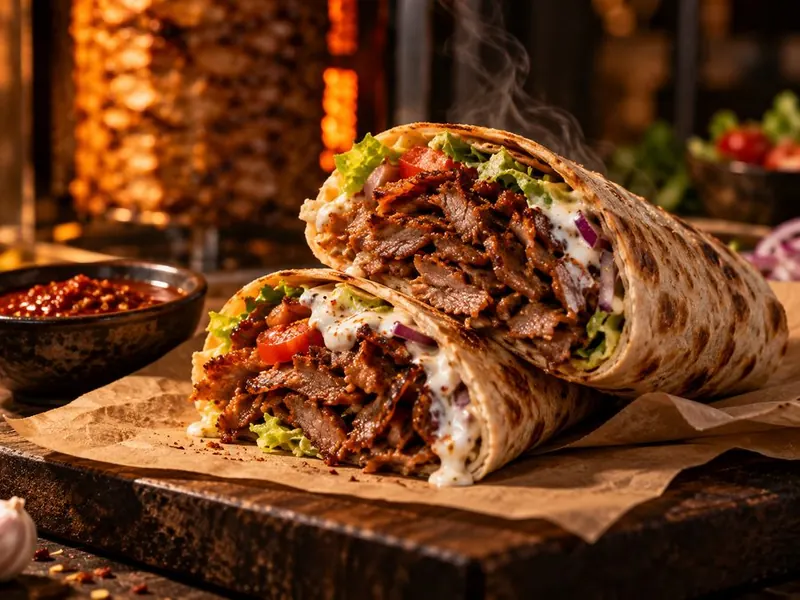
Ask for a kebab in Singapore and you'll usually get thin slices of meat carved from a tall rotating spit, wrapped in bread with salad and sauce. That dish has a Turkish name, döner kebap, and a story that goes back more than 150 years.
What the name means
Kebab is a broad word for roasted or grilled meat that travelled through Arabic, Persian and Turkish. Döner comes from the Turkish verb dönmek, "to turn". So döner kebab simply means "turning roast": meat that slowly rotates next to the heat while the outside is carved off.
From a horizontal spit to a vertical one
Stacks of seasoned meat were roasted on horizontal spits in the Ottoman Empire for centuries. The big change came in the 19th century, when cooks stood the spit upright. A vertical spit takes less space, lets the fat baste the meat as it turns, and makes it easy to shave off thin, crisp slices.
Two cooks are usually credited: İskender Efendi of Bursa, whose family says he came up with the idea in the mid-1800s, and Hamdi Usta of Kastamonu, who may have done it even earlier. Bursa is still the city most people link with döner, and İskender's name lives on in iskender kebab: döner over pide bread with tomato sauce, melted butter and yoghurt.
How kebab travelled the world
- Istanbul made döner a city favourite in the 20th century, and it was sold as a sandwich there by the 1960s.
- Greece got its own version, gyros, which also means "turn". See how they differ.
- The Arab world developed shawarma, a name that also comes from a Turkish word for turning.
- Berlin turned döner into fast food in the early 1970s, when Turkish workers started selling it in bread with lots of salad and sauce. Kadir Nurman is often named as the man who popularised the sandwich in 1972, though other people have made similar claims.
How real Turkish kebab is made
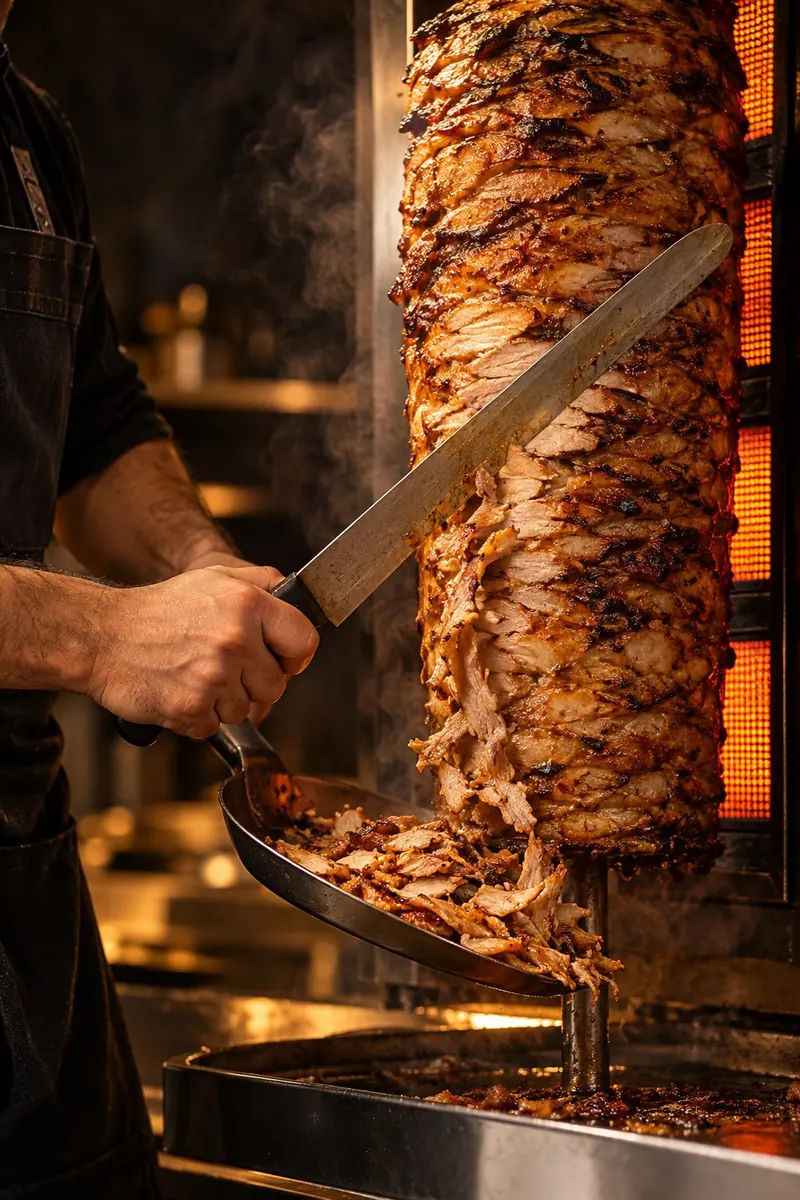
Traditional döner is built by hand. Thin slices of marinated meat are stacked layer by layer onto the spit, sometimes with minced meat between them, and roasted slowly beside the heat. The cook shaves off thin slices only when the outside is browned and crisp, then lets the next layer cook.
Kebab shops can also buy factory-made cones, which are cheaper but often taste the same everywhere. That's why the best kebab tastes different from shop to shop: the meat, the marinade and the way it's carved all matter.
How to spot good kebab in Singapore
- Thin slices, crisp edges. Good döner is carved thin, with caramelised edges and a juicy middle.
- Carved when you order. Meat that sits in a tray after carving dries out quickly.
- Fresh bread and simple sides. Warm pide or wraps, crunchy salad, garlic yoghurt and a bit of chilli are enough.
- A real spit. Kebab from a vertical spit beats meat that's been pan-fried from frozen strips.
Want to see it carved fresh at your next event? A live kebab station brings the spit to your venue.
Quick answers
What does döner mean?
Döner comes from the Turkish verb dönmek, which means to turn. Döner kebab means turning roast, after the vertical spit that rotates next to the heat.
Where was döner kebab invented?
Döner kebab comes from the Ottoman Empire. The vertical spit is usually credited to cooks in Bursa and Kastamonu in the 19th century.
Is kebab the same as shawarma?
They're close relatives. Both are carved from a vertical spit, but döner is the Turkish version and shawarma the Arab one, with different spices, sauces and bread.